Back to Journal

A wildlife-friendly garden does not have to look wild, messy or unloved. It can still be beautiful, calm and well thought out. The difference is that the planting is chosen not just for how it looks, but for what it gives back. Flowers for bees. Berries for birds. Seed heads for winter. Shelter for insects. A little water. A few corners left alone.

Even a small garden, courtyard or balcony can become more useful to wildlife with the right plants. You do not need acres of meadow or a huge orchard. A few generous pots, a flowering climber, a herb corner or a berrying shrub can all help bring more life into the garden.

Start With Flowers for Pollinators

Bees, butterflies, hoverflies and other pollinating insects need flowers rich in nectar and pollen. The easiest way to help is to grow a mix of plants that flower at different times of year. Early flowers help insects when they first become active. Summer flowers keep the garden busy. Later flowers are important because they give bees food before the colder months arrive. A wildlife-friendly garden should never feel empty for too long.

Choose Simple, Open Flowers

When choosing flowers for bees, simple is often better. Many highly bred double flowers look beautiful but can be harder for insects to access. Look for flowers where you can see the middle — daisy-shaped flowers, open herbs, small clusters of tiny blooms and simple cottage-garden flowers are often much easier for pollinators to use.

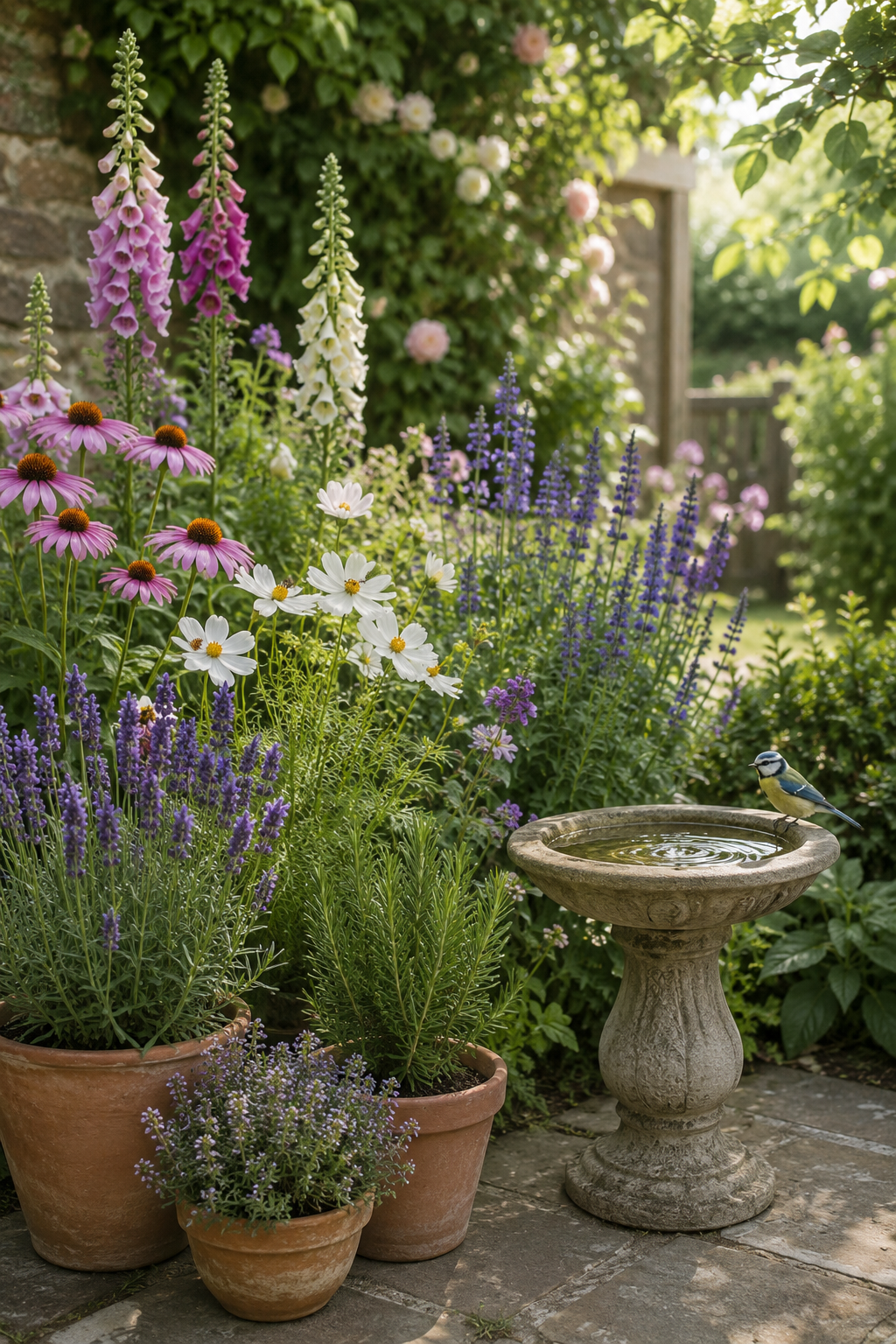
Good choices include lavender, cosmos, echinacea, rudbeckia, verbena, borage, hardy geraniums, foxgloves, alliums, single dahlias, catmint and marjoram. These plants can still look lovely in a styled garden. Wildlife-friendly does not mean giving up on beauty.

Grow Herbs and Let Some Flower

Herbs are one of the easiest ways to make a garden more useful for bees. Rosemary, thyme, chives, sage, oregano, marjoram, mint and lavender can all be grown in pots, borders or raised beds. Many are useful in the kitchen, smell beautiful and look good in a relaxed garden setting. If you can, let at least some herbs flower — chive flowers, thyme flowers and oregano flowers are all loved by pollinators.

Plant for Birds as Well as Bees

Birds need more than bird feeders. They need natural food, shelter and places to perch, hide and nest. Plants with berries, seeds and insects are especially useful. Good bird-friendly plants include hawthorn, holly, ivy, pyracantha, rowan, crab apple, cotoneaster, elder, blackthorn, dog rose and honeysuckle.

Ivy is especially useful because it flowers late in the year, giving insects food when many other plants have finished, and its berries are valuable for birds through winter. If you have room for only one wildlife-friendly climber, ivy or honeysuckle are very good choices.

Keep Some Seed Heads Standing

It is tempting to cut everything back as soon as flowers fade, but leaving some seed heads can really help wildlife. Sunflowers, teasels, echinacea, rudbeckia, alliums and ornamental grasses can all look beautiful as they dry, and also provide seeds, shelter and winter structure. Instead of cutting the whole garden back at once, leave a few strong shapes standing through the colder months.

Add Water

Water is one of the simplest ways to help wildlife. A bird bath, shallow bowl, small pond or even a saucer of water with a few stones in it can all be useful. Birds need water for drinking and bathing. If you have a tiny garden or balcony you do not need a pond — a heavy shallow dish in a quiet spot can still help. Keep the water clean and place it somewhere birds can see danger coming.

Leave One Slightly Untidy Corner

Leave a small patch of long grass, a pile of logs, a few fallen leaves under a hedge or a quiet corner behind pots. These little spaces can provide shelter for insects, beetles, frogs, hedgehogs and other garden wildlife. It does not have to ruin the look of the garden — tuck it behind a shrub or at the back of a border. Think of it as a hidden wildlife corner rather than mess.

Wildlife-friendly planting is not about letting the garden go. It is about making kinder choices. Choose flowers that feed bees. Add berries for birds. Let some seed heads stand. Grow herbs. Plant a climber. Keep a little water outside. Leave one small corner undisturbed. A garden with bees, birds and butterflies feels different. It feels alive.