Living room · Table lamp
Warm Table Lamp
The single easiest upgrade for any living room. A table lamp placed beside a sofa or chair changes the whole atmosphere of an evening — softer, warmer and far more inviting than any ceiling light. Choose a warm bulb and place it low.
View on Amazon →
Living room · Floor lamp
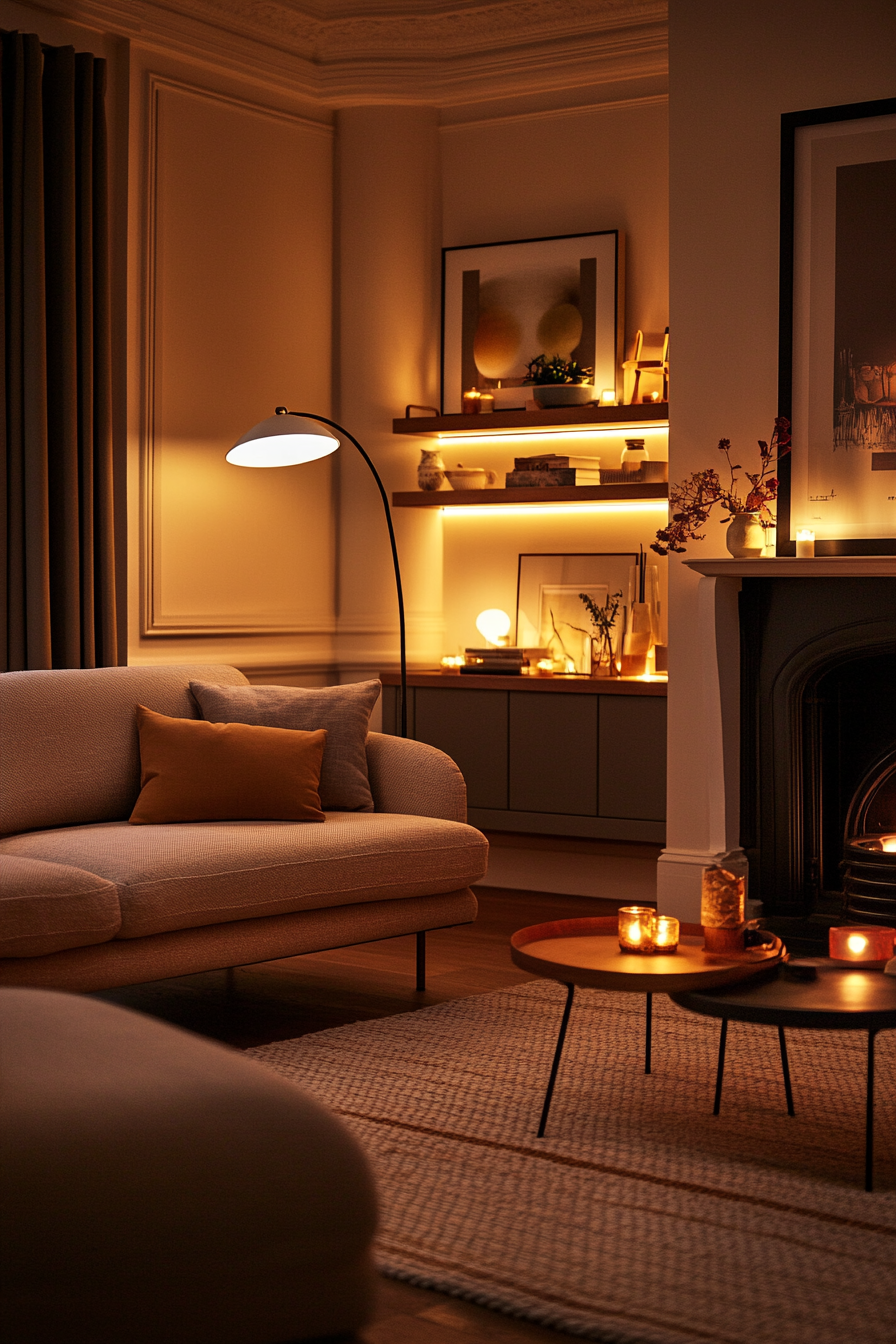
Arched Floor Lamp
A tall arched floor lamp creates exactly the kind of soft side lighting that makes a living room feel genuinely atmospheric. Positioned behind a sofa or beside a reading chair, it adds height, warmth and a pool of light in exactly the right place.
View on Amazon →
Kitchen · Pendant lighting
Pendant Light for Kitchen Island
Above an island or a dining table, a pendant light does two things at once — it provides useful downward light for practical tasks and anchors the space visually. Warm brass or natural materials work best with wood, stone and natural kitchen textures.
View on Amazon →
Bedroom · Bedside lamp
Bedside Table Lamp
Overhead lighting in a bedroom rarely feels restful. A good bedside lamp with a warm bulb changes everything — softer, quieter and much easier to wind down by. Two matching lamps either side of the bed is one of the most effective bedroom upgrades there is.
View on Amazon →
Bathroom · Mirror lighting
Warm Bathroom Mirror Light
Most bathroom lighting is too bright and too cold. Warm light around or above a mirror changes the whole tone of the room — softer, calmer and genuinely more pleasant to spend time in. A small change that makes a bigger difference than expected.
View on Amazon →
Any room · Warm bulbs
Warm White LED Bulbs
The quickest and cheapest lighting upgrade in any home. Swapping cool or neutral bulbs for warm white ones changes how every material in the room looks — wood feels richer, linen feels softer and paint colours read as they were always meant to.
View on Amazon →
Any room · Candles
Pillar Candles and Holders
Candlelight does something that no electric bulb can quite replicate — a warmth that moves slightly, catches on textures and makes a room feel genuinely alive in the evening. A few well-placed candles are one of the most atmospheric things you can add to any room.
View on Amazon →
Any room · Dimmer switches
Dimmer Switch
The most overlooked lighting upgrade in most homes. A dimmer switch costs very little and transforms how a room feels at different times of day — brighter when you need it, softer when you do not. Particularly valuable in living rooms and bedrooms.
View on Amazon →
If you buy through our links we may earn a small commission, at no extra cost to you.
Home lighting changes how every room feels.
It affects colour, texture and comfort more than most furniture does.
Use layers
Mix table lamps, wall lights, candles and soft overhead lighting instead of relying on one bright ceiling light.
Light the corners
A lamp beside a sofa, chair or shelf gives the room depth and makes evenings feel warmer.
Choose warm bulbs
Warm white light usually feels softer at home. It flatters wood, fabric, paint and ceramics.