Back to Journal

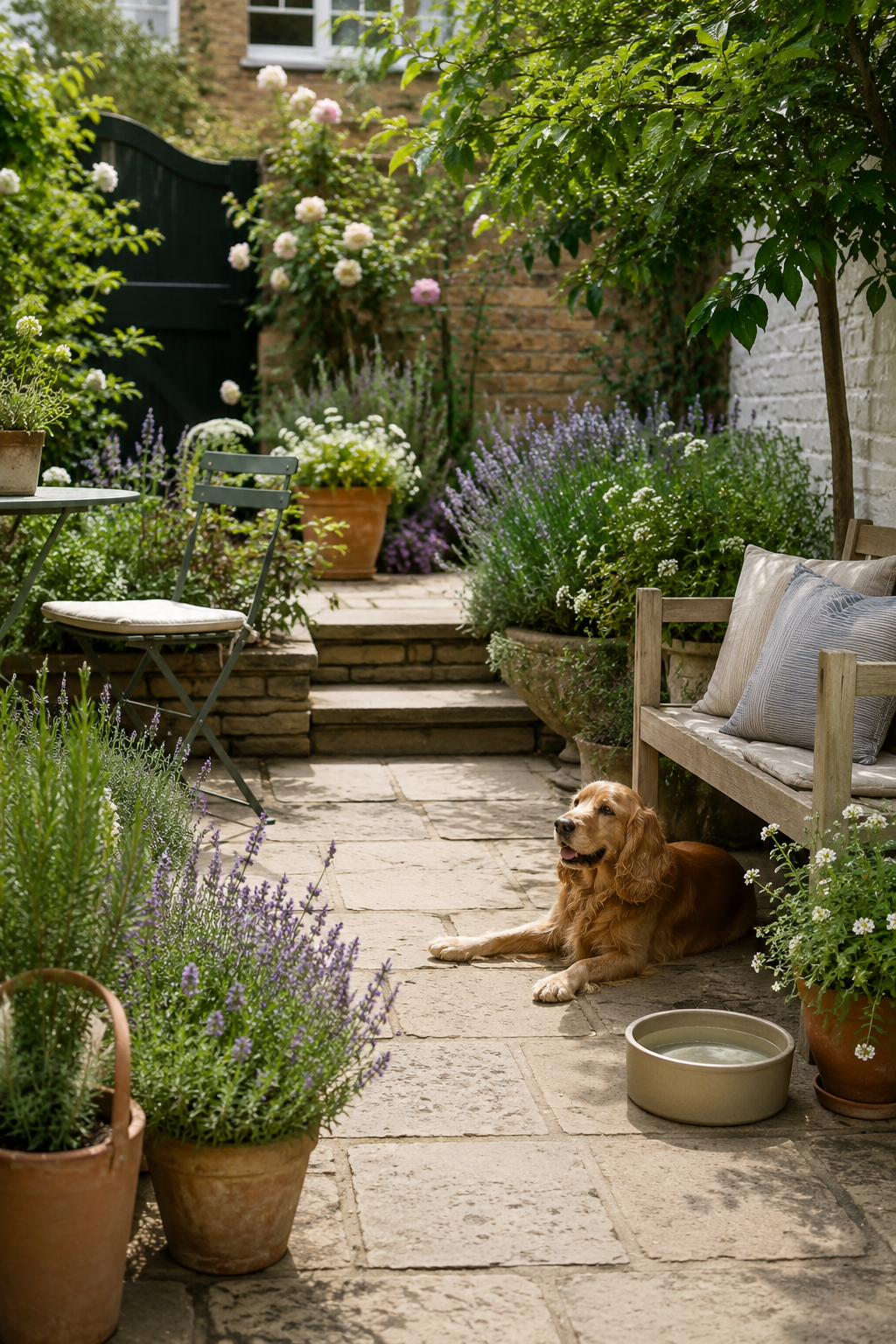
A pet-friendly garden does not have to look messy, bare or purely practical. It can still feel calm, stylish and full of lovely details — somewhere you want to sit with a coffee, grow a few herbs, enjoy the flowers and let your dog or cat wander safely. The trick is to design the garden with real life in mind.

Start With Safety Before Styling

Before adding new plants, pots or garden accessories, take a proper look at what is already there. Some common garden plants can be harmful to pets if chewed or eaten. Lilies are especially dangerous for cats, and plants such as foxgloves, lily of the valley, daffodils, tulips, bluebells, azaleas and rhododendrons can also be a problem. If your pet is a chewer, a digger or still young and curious, it is worth checking plant safety carefully before you buy anything new. A garden can be beautiful without risky planting.

Choose Strong, Simple Planting

Pet-friendly gardens work best with plants that can cope with a little life around them. Avoid very delicate planting right beside paths, doors or favourite running routes. Good-looking options include herbs, grasses, roses, sunflowers, petunias, nasturtiums, lavender, rosemary and hardy shrubs. Larger pots are particularly useful because they lift plants away from paws and make the garden feel more designed.

Create Clear Paths and Routes

Dogs often make their own paths through a garden. Rather than fighting it, work with it. If your dog always runs along the fence or cuts across the lawn, leave that route open and make it look intentional with gravel, stepping stones, bark or paving. This keeps borders from getting trampled and gives the garden a calmer layout.

Add a Shady Spot

Pets need shade in warm weather, and a shaded corner can look lovely if you design it well. A bench under a tree, a parasol over a small table, a pergola with climbers or a simple shaded area beside large pots can all work beautifully. For dogs, a cool place to lie down is especially important in summer. Add outdoor cushions, a washable rug and lanterns nearby to make it feel restful for you too.

Use Washable Outdoor Textiles

If pets use the garden, washable pieces are your friend. Outdoor rugs, cushion covers, throws and seat pads should be easy to shake out, wipe down or wash. Darker neutrals, stripes, natural textures and patterned fabrics can be more forgiving than plain pale fabrics. This does not mean everything has to look dull — a striped cushion or a woven outdoor rug can make the garden feel pulled together while still being practical.

Use Raised Beds and Planters

Raised beds and planters are brilliant in pet-friendly gardens because they protect plants from digging, trampling and casual chewing. They are especially useful for herbs, vegetables and flowers. Tall planters, troughs and window boxes can keep things tidy while still giving you plenty of greenery — and they make gardening easier if you do not want to be constantly bending down.

Think About Boundaries

A beautiful garden still needs to be secure. Check fences, gates and gaps before letting pets roam freely. You can soften practical boundaries with climbers, trellis, tall pots or hedging. A secure garden does not have to look like a cage — it can look green, layered and private.

Give Them Their Own Spot

If your dog loves lying in the sun, give them a place to do it. A washable mat, a low outdoor cushion or a sheltered spot by the door can help stop pets taking over the furniture you would rather keep clean. It also makes the garden feel kind. A home should work for everyone who lives in it.

A pet-friendly garden is not about giving up on style. It is about making better choices. Choose safe plants. Keep chemicals out of reach. Add shade. Use washable textiles. Create clear paths. Make the boundaries secure. Then add the lovely things — pots, lanterns, herbs, cushions, outdoor rugs and beautiful planting. The best gardens are not perfect. They are lived in, loved and used every day.