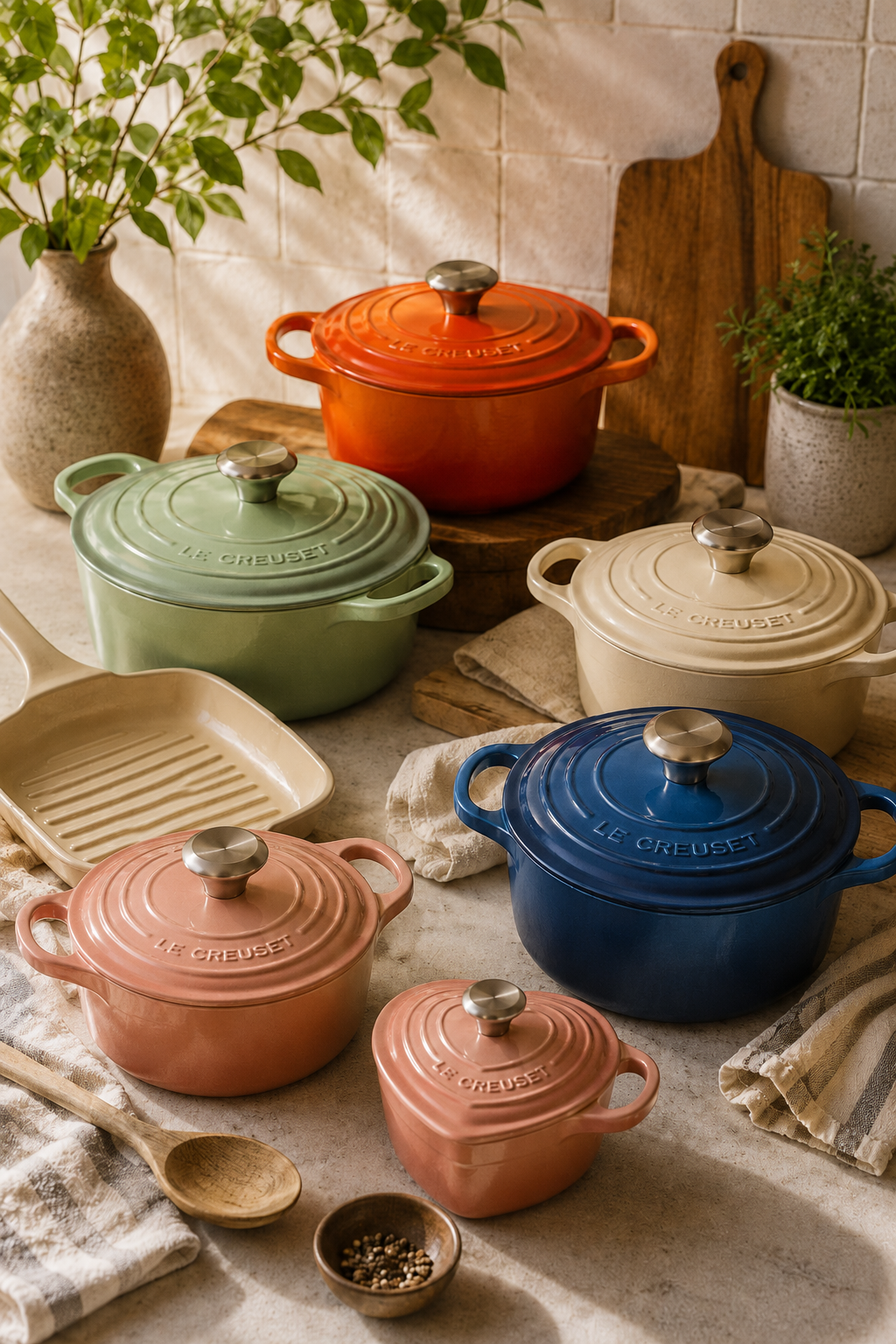
A Le Creuset casserole is one of those kitchen pieces people tend to think about for a long time before buying. It is not a little impulse purchase. It is a proper investment piece — the kind of thing that can sit on the hob, go in the oven, come to the table and still look beautiful years later.
But choosing one can be surprisingly difficult. Round, oval, shallow, deep, small, large, classic colours, softer colours, statement colours — it is very easy to get pulled in by the prettiest one and forget to ask the useful question:
Which one will I actually use the most?
The best Le Creuset casserole is not always the biggest, the newest or the most dramatic colour. It is the one that suits the way you cook.
Start With What You Cook Most Often
Before choosing a size or shape, think about your everyday cooking.
Do you make soups, stews and casseroles? Do you cook for two or for a family? Do you roast whole chickens? Do you make one-pot pasta, risotto, curries or slow-cooked dishes? Do you like something that can go straight from oven to table?
This matters because different shapes are better for different jobs. A deep round casserole is a brilliant all-rounder. A shallow casserole is lovely for risottos, pasta dishes and anything you want to reduce. An oval casserole is useful for longer cuts of meat or whole birds.
If you only buy one, choose the one that fits your real cooking habits, not the fantasy version of yourself who suddenly makes huge Sunday roasts every week.
The Round Casserole: The Safest All-Rounder
If you are buying your first Le Creuset, the round casserole is usually the safest choice.
It is the classic shape for soups, stews, casseroles, chilli, curry, pasta sauce, braising, baking bread and slow cooking. It works well on the hob because the base sits evenly over the heat, and it transfers beautifully to the oven.
This is the one I would choose if you want one hardworking piece that can do a bit of everything.
The Shallow Casserole: The One You Might Use More Than You Expect
The shallow casserole is a really useful piece, especially if you like food that starts on the hob and finishes in the oven.
It has a wider base and lower sides, which makes it good for browning, reducing sauces, cooking risotto, making one-pan dinners and serving at the table. It feels less like a deep stew pot and more like a generous everyday pan.
If your cooking is more risotto, pasta, chicken thighs, roasted vegetables and easy one-pot meals, this may be more useful than a deep casserole.
The Oval Casserole: Best for Roasts and Longer Cuts
The oval casserole is lovely if you often cook whole chickens, joints of meat or longer cuts that do not fit comfortably in a round pot.
It has a slightly more traditional, generous feeling and looks beautiful brought to the table. The shape is useful, but it is not always as neat on a smaller hob because the base may not sit over the heat as evenly as a round casserole.
I would choose oval if you already know you cook a lot of roasts, whole birds or larger family meals.
The Small Casserole: Beautiful, But Be Realistic
Small casseroles are charming. They look lovely on open shelving and are useful for sauces, side dishes, dips, small portions and cooking for one or two.
But if you want your first serious casserole dish, be careful not to go too small. A tiny casserole may look beautiful, but it can feel limiting very quickly if you cook proper meals.
A smaller size is best if you already have a larger pot, cook in small quantities, or want something pretty for side dishes and serving.
The Large Casserole: Useful If You Really Need It
A large casserole is wonderful if you batch cook, entertain, make big soups or cook for a family.
The only downside is weight. Cast iron is heavy, and it becomes much heavier when full. If a pot is too heavy to lift comfortably, you may avoid using it.
Before choosing the biggest one, think about storage, washing up, lifting it in and out of the oven, and how much food you normally cook.
Bigger is brilliant when you genuinely need capacity. Otherwise, a medium size is often the one that gets used most.
What Size Should You Choose?
If you are unsure, a medium round casserole is usually the most sensible starting point. It gives you enough room for everyday meals without being too awkward to handle.
For one or two people, a smaller to medium size may be enough. For a family, batch cooking or entertaining, a larger size will be more practical. If you want one pot that earns its place, avoid going too tiny.
The best size is the one you can use often, lift comfortably and store without it becoming annoying.
Which Colour Should You Buy?
Colour is personal, but it does matter because a Le Creuset casserole is often kept out on display.
If you want something timeless, cream, white, black, navy, deep green or classic volcanic orange are safe choices. If your kitchen is soft and natural, sage, pale blue, shell pink or neutral tones can look beautiful. If you want a statement piece, a stronger colour can be wonderful.
My honest advice is to choose a colour you can imagine loving in ten years. Le Creuset is not the kind of thing you want to replace because the colour suddenly feels wrong.
Round or Shallow: Which Is Better?
If you make lots of soups, stews, casseroles and bread, choose a round casserole.
If you make risotto, pasta dishes, chicken pieces, one-pan meals and things you like to serve at the table, choose a shallow casserole.
If I could only have one, I would choose the round casserole for maximum versatility. But if you already have a good deep pot, the shallow casserole might be the piece that feels more exciting and useful day to day.
Is Le Creuset Worth It?
Le Creuset is expensive, so it needs to be something you will use.
It is worth considering if you cook regularly, like slow-cooked meals, want something that looks good enough to serve from, and prefer buying fewer, better things. It is less worth it if you rarely cook from scratch or know you will find the weight annoying.
This is the kind of kitchen piece that makes sense when it becomes part of your routine. A soup on a Sunday. A stew in winter. A curry for guests. A loaf of bread. A slow-cooked sauce. A one-pot dinner that comes to the table looking beautiful.
My Honest Pick
For most homes, I would start with a medium round casserole.
It is the most flexible shape and the one you are most likely to use again and again. It works for everyday meals, proper cooking, colder months, family food and simple one-pot dishes.
If you already have a good deep pot, I would consider a shallow casserole instead. It feels slightly more relaxed, more modern and very useful for the kind of food many people cook during the week.
If you roast whole chickens or cook larger cuts often, then oval makes sense. But as a first Le Creuset, round is usually the safest choice.
Final Thought
A Le Creuset casserole should not just be beautiful. It should earn its space.
Choose the shape that suits how you cook. Choose a size you can lift and store. Choose a colour you will still love years from now.
The right one will not sit in a cupboard waiting for special occasions. It will become part of the rhythm of your kitchen — used, loved, washed up, put back on the shelf and reached for again.
That is when a kitchen investment really makes sense.