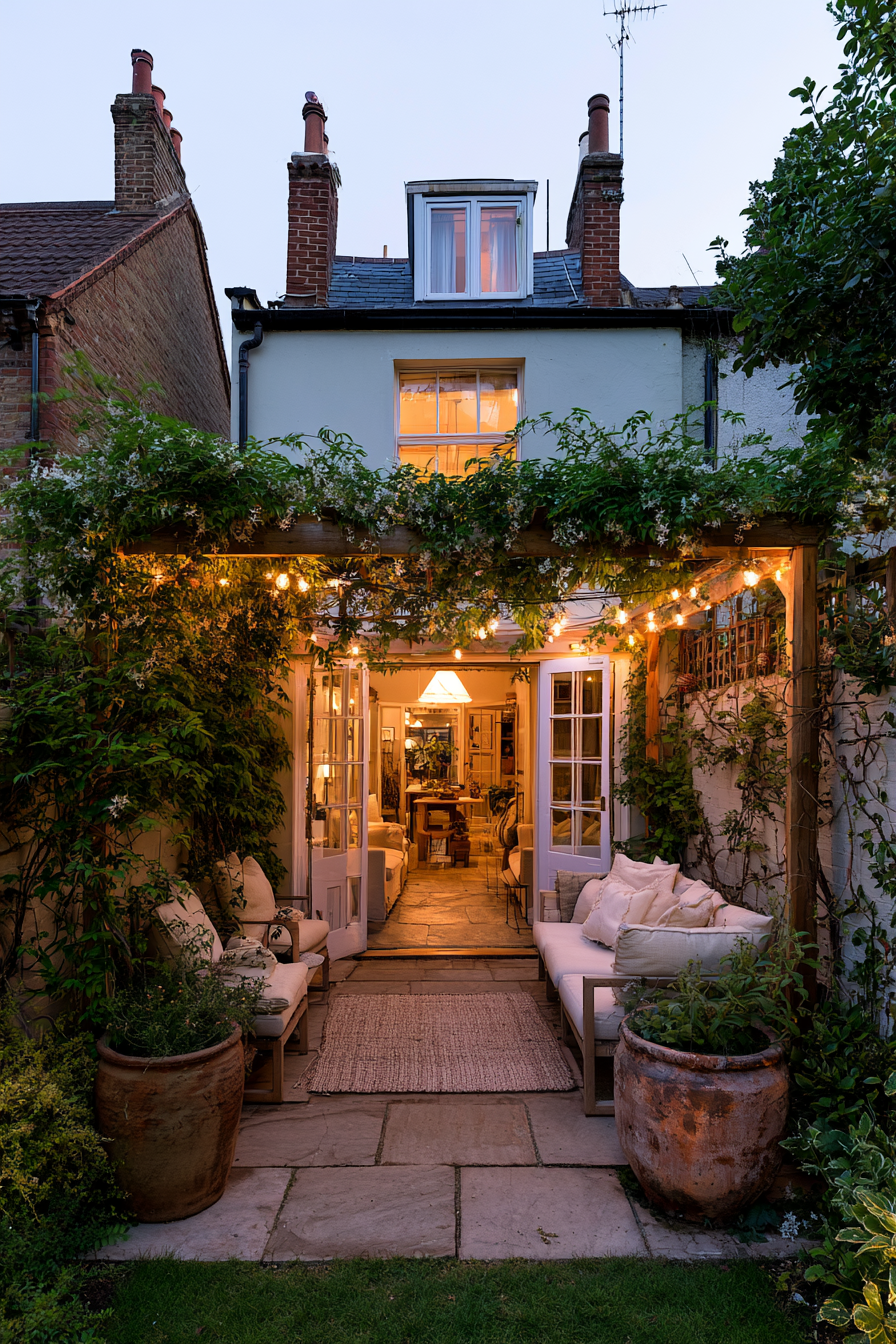
There is a particular kind of magic that happens when a small outdoor space is done well. It stops feeling like a limitation and starts feeling like a destination — somewhere you actually want to take your morning coffee, or sit with a glass of wine at the end of the day. The trick is not square footage. It is intention.
Whether you have a compact courtyard, a narrow terrace, a tiny patio or just a sliver of a garden, the principles are the same. A few well-chosen things, placed thoughtfully, do far more than a garden full of unrelated pieces. Small spaces reward editing. They reward restraint. And they reward the kind of small decisions that make a space feel genuinely considered.
The first thing worth understanding is that small gardens do not need to be made to feel bigger. They need to be made to feel good. A well-designed small garden that feels intimate and complete is always preferable to one that is trying — and failing — to impersonate something larger. Work with the scale, not against it.
One of the most effective things you can do is define the space with an outdoor mat. This sounds almost too simple, but it genuinely transforms a patio or courtyard. A well-chosen mat creates an instant room — the eye registers it as a defined living area rather than just a patch of paving. It anchors your furniture, gives the whole setup a sense of intention and makes the space feel finished in a way that is hard to achieve otherwise. In a small space, a mat that is slightly too generous reads better than one that is too small — it makes the area feel more expansive rather than pinched.
Lighting changes everything once the sun goes down. Festoon lights are one of the best small-garden investments there is — warm, atmospheric and completely transformative in the evening. String them overhead between two walls, along a fence line or draped above a seating area. The key is warm bulbs. They do what candlelight does indoors: they make the space feel intimate and alive rather than simply illuminated. In a small garden, that warm glow in the hours after dark makes the space feel cosy rather than compact.
Planting is where many small gardens go wrong. The instinct is to fill every corner with small pots and trailing things, and the result is a space that feels cluttered and busy. The better approach is to go bigger with fewer pieces. One or two large pots with architectural plants — an olive tree, a fatsia, a clipped standard bay — create a focal point and give the space a sense of scale and purpose that a dozen small pots simply cannot. Large pots also hold moisture better through dry spells, which means healthier plants with less effort.
Comfortable seating is perhaps the single most important upgrade a small garden can have. A proper garden sofa with deep cushions does something fundamental — it signals that this is somewhere to actually be, not just pass through. It changes the entire relationship you have with your outdoor space. In a small area, look for furniture with clean lines and legs that allow light to pass underneath, which keeps the space feeling open. Add a side table, a couple of cushions in a calm palette and you have an outdoor room genuinely worth spending time in.
Beyond the essentials, there are a few other things worth considering. Vertical space is underused in almost every small garden — walls and fences are prime real estate for climbers, wall-mounted planters or a simple shelf of pots. Fragrant plants earn their place too: a jasmine on the fence, lavender along a border or rosemary by the door makes a small garden feel luxurious every time you step into it. And keeping at least one sightline clear — to a statement plant, a wall feature or simply open sky — prevents the space from feeling hemmed in.
The best small gardens are not the ones that try to do everything. They are the ones that do a few things very well — and make you forget you ever wanted more space.