Back to Journal

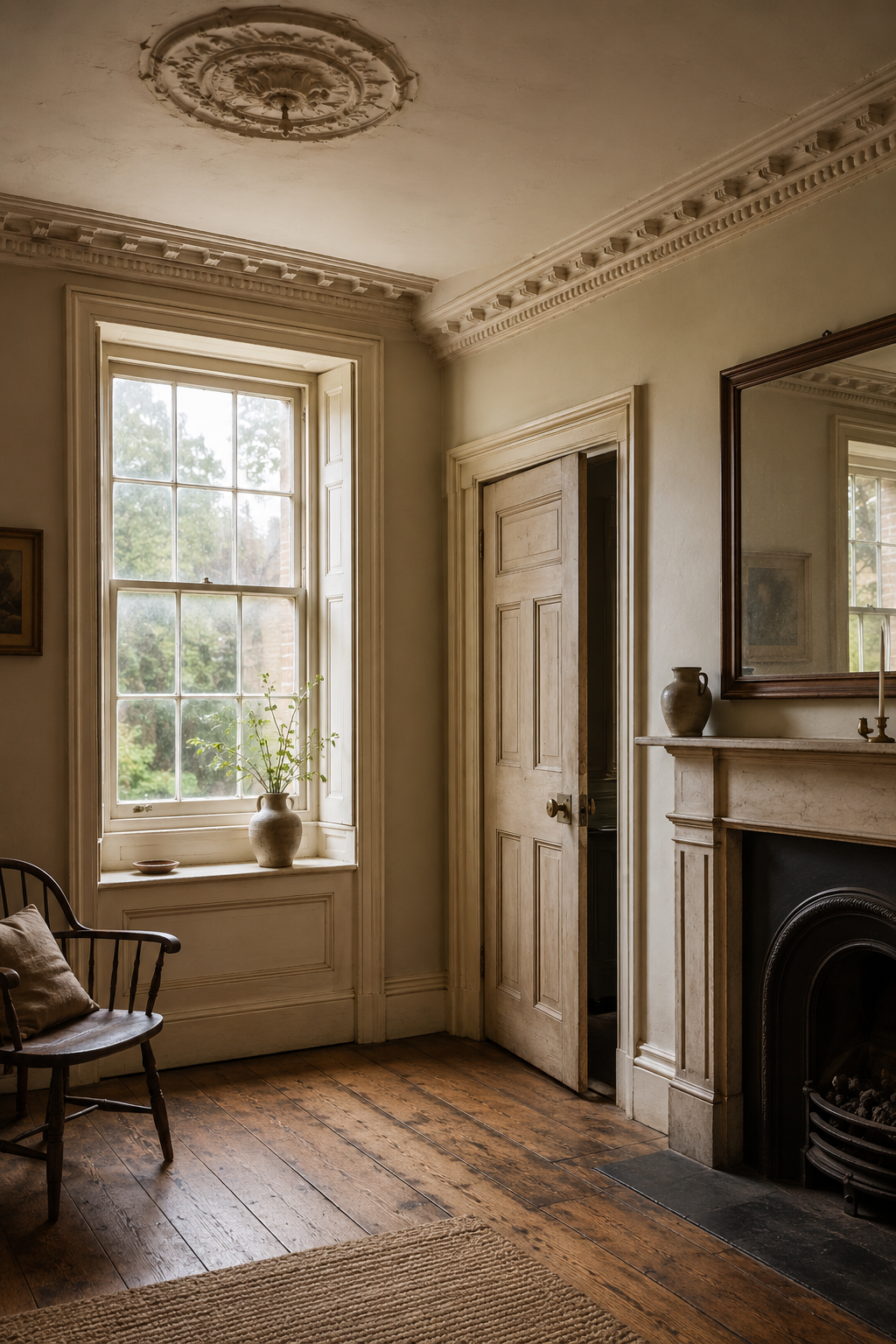
Older homes have a kind of character that is very hard to recreate. It is not usually one single grand feature. More often, it is the collection of small details: the original doors, the old floorboards, the deep skirting boards, the fireplace, the ceiling rose, the worn brass handle, the slightly uneven glass in the window. These are the things that give a house its soul.

When renovating or decorating an older home, it can be tempting to strip everything back and start again. Sometimes that is necessary, especially if something is unsafe or beyond repair. But often, the most beautiful result comes from preserving what is already there and working gently around it.

Original Windows

Original windows are one of the most important features to think carefully about before replacing. Old timber or metal windows often have proportions, glazing bars and craftsmanship that modern replacements struggle to copy. Even the slight waviness of old glass can add softness and charm to a room. Repairing historic windows is often better than replacing them — repair can preserve character, cost less, be more sustainable and, when done properly, last well. Before ripping out old windows, it is always worth asking: can they be repaired?

Fireplaces

An original fireplace can completely anchor a room. Even if it no longer works as a real fire, the surround, mantel, tiles or cast iron insert can give the space a natural focal point. Removing it can leave a room feeling strangely flat, especially in Victorian, Edwardian and Georgian houses where fireplaces were central to the layout. A fireplace does not have to be grand to be worth keeping — a simple bedroom fireplace, a tiled surround or a worn timber mantel can all add warmth and history.

Cornices, Ceiling Roses and Plasterwork

Ceiling details are easy to overlook until they are gone. Cornices, coving, ceiling roses and decorative plasterwork help frame a room and soften the join between wall and ceiling. These features are especially worth preserving because modern replacements rarely have quite the same depth or crispness as older plasterwork. If the plasterwork is damaged, it may still be repairable — a specialist plasterer can often mend or copy sections rather than removing everything.

Original Doors

Old doors are often much better than they first appear. They may have been painted many times, fitted with odd handles or made to look tired by years of wear, but underneath they can be solid, beautifully proportioned and full of character. Panelled doors, ledged doors and original internal doors are all worth a second look. A good old door has weight. It changes how a room feels.

Door Handles, Latches and Hinges

Small hardware can tell you a lot about a house. Old brass knobs, rim locks, finger plates, latches, hinges and keyholes are all details worth preserving if they still work or can be restored. They add texture and quiet interest without needing to shout. Do not underestimate these details — a modern flat door with a basic handle feels very different from an old panelled door with a proper brass knob.

Floorboards and Original Flooring

Old floors carry the life of a house. They may not be perfectly level. They may creak. They may have old nail marks, colour changes and worn patches. But those marks are often part of the beauty. Original timber floorboards, stone flags, quarry tiles and encaustic tiles are all worth investigating before covering or replacing. Sometimes a tired floor simply needs cleaning, sanding, sealing or waxing. A perfect new floor may be practical, but an old floor often has more feeling.

Skirting Boards, Architraves and Picture Rails

These are the background details that quietly make an older room feel right. Deep skirting boards, door architraves and picture rails give a room proportion and help the walls feel finished. Removing them can make an old home feel oddly stripped out. Picture rails are especially useful because they let you hang artwork without constantly marking old plaster walls.

Staircases and Banisters

A staircase is often one of the most characterful parts of an older home. Rather than replacing a tired staircase, consider whether it can be cleaned, repaired, painted or restored. A simple runner, careful lighting and freshly painted walls can make an old staircase feel beautiful again without losing its history. Staircases are expensive and difficult to replace well, so keeping the original is almost always the better option.

Tiles

Original tiles are always worth checking before covering over. Hallway tiles, fireplace tiles, old kitchen tiles, porch tiles and bathroom tiles can all add enormous character. Even if some are cracked or stained, they may be repairable or worth keeping as part of the building's story. A tiled hallway with a few imperfections can be far more beautiful than a brand new surface with no soul.

Older homes do not need to be frozen in time. They can have modern kitchens, warm lighting, good heating and comfortable furniture. But the magic often lies in the details that have already survived. The old door. The uneven floorboard. The fireplace. The deep skirting. The worn brass handle. These are not flaws. They are the things that make a house feel alive. Preserve what you can. Repair what is worth saving. Replace only when you really need to.